Stepping off the subway and into the bustling, vibrant streets of Insadong feels like stepping through a historical portal right in the middle of Seoul’s hyper-modern metropolis. If you have spent your first few days in Korea marveling at futuristic skyscrapers, neon-drenched shopping districts, and high-speed digital infrastructure, you might find yourself craving a deeper, more grounded connection to Korea’s rich historical heritage. That is precisely where Insadong comes in.
As a long-term local resident who has spent countless afternoons exploring the hidden alleyways and ancient courtyards of this cultural district, I can tell you that Insadong is much more than just a tourist souvenir market. It is the living, breathing heart of Korea’s traditional arts, crafts, and philosophical roots. However, for a first-time foreign visitor, navigating Insadong can sometimes feel a bit overwhelming. Where are the authentic traditional tea houses hidden away from the noisy main drag? How do you distinguish genuine handmade Korean pottery from mass-produced factory imports? And what is the proper way to explore the famous labyrinthine floors of the Ssamzigil complex?
In this comprehensive, up-to-date 2026 guide, we will break down everything you need to know to spend a truly memorable, culturally immersive day in Insadong, complete with walking routes, hidden gems, shopping secrets, and expert local tips.

1. Understanding Insadong: A Brief Cultural Overview
Located in the Jongno-gu district of central Seoul, Insadong (officially Insadong-gil) has a history stretching back over 500 years to the Joseon Dynasty. During that era, it was home to government offices and painters, gradually evolving into a vibrant hub for antique dealers, art galleries, calligraphers, and scholars.
Why Insadong is a Must-Visit for Travelers:
- The Epicenter of Korean Traditional Arts: Roughly 40% of Korea’s antique shops, traditional fine art galleries, and craft workshops are concentrated right here.
- Pedestrian-Friendly Alleys: The main street and its intricate network of spiderweb-like side alleys (kkulmok) are designed for leisurely walking, keeping heavy vehicular traffic at bay.
- A Living Museum: From traditional calligraphy brushes and handmade hanji (Korean mulberry paper) to exquisite celadon ceramics and herbal tea houses, every corner tells a story of Korea’s artistic legacy.
2. Navigating the Main Street and Hidden Alleys (Walking Route)
To make the most of your day, a structured approach is best. Avoid simply walking straight down the main boulevard and back. The true magic of Insadong lies in its narrow side alleys.
Step 1: Start at the Insadong Tourist Information Center
- Begin your journey near Jonggak Station (Line 1) or Anguk Station (Line 3, Exit 6). Head toward the iconic stone monument marking the entrance of Insadong-gil.
- Stop by the local information booth if you need a physical map, though following a digital map like Naver or Kakao will serve you well.
Step 2: Stroll the Main Insadong-gil Boulevard
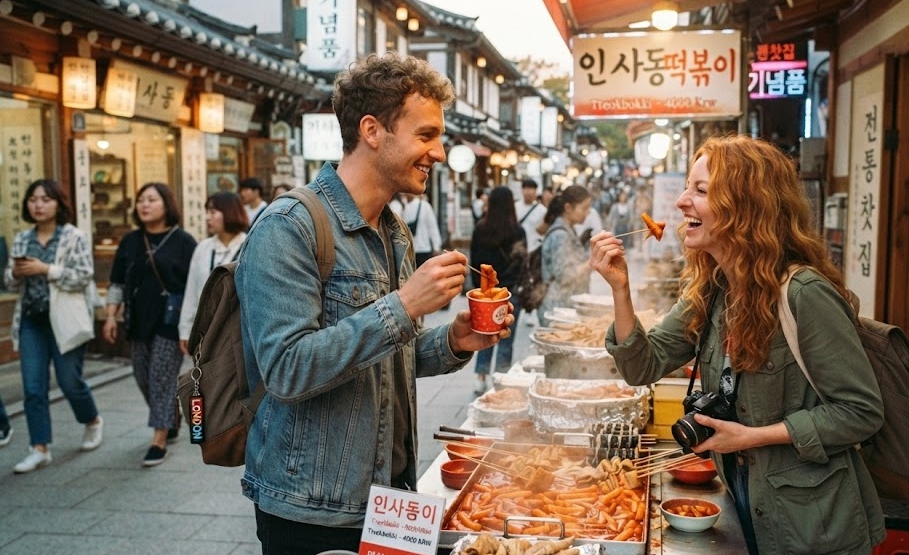
- As you walk down the wide, pedestrian-friendly main street, keep your eyes open for street food vendors selling traditional treats like insadong hotteok (sweet stuffed pancakes filled with brown sugar and nuts) and ggultarak (traditional royal court honey pastries).
- Take your time browsing open-air art stalls, street portrait artists, and antique calligraphy shops.
Step 3: Dive into the Alley Labyrinths (Ikseondong vs. Insadong Alleys)
- Veer off the main road into the side alleys (specifically toward Insa-dong 12-gil and surrounding paths). Here, traditional tile-roofed hanok houses have been creatively converted into indie art studios, modern craft boutiques, and cozy tearooms. This is where you escape the heavy tourist crowds and find genuine local artistic flavor.
3. Architectural Wonder: Exploring Ssamzigil (쌈지길)
You cannot write a guide about Insadong without highlighting its most iconic modern landmark: Ssamzigil. Opened in 2004, this unique four-story shopping and cultural complex was designed specifically to mimic the flowing, continuous slope of Insadong’s traditional alleyways.
How to Experience Ssamzigil Like a Pro:
- The Spiral Walkway Concept: Instead of traditional stairs and elevators, Ssamzigil features a continuous, gently sloping wooden boardwalk that spirals all the way from the ground floor up to the rooftop garden. You never actually take stairs; you simply stroll upward while examining open-studio artisan shops on either side.
- What to Shop For: The building houses over 70 independent designer shops specializing in modern-traditional fusion crafts, handmade silver jewelry, leather goods, ceramic artwork, and cute stationery.
- The Poop Cafe (Ddung Ssamji): Located within or near the cultural spaces, you will notice whimsical, tongue-in-cheek Korean pop culture themes, including the famous rooftop poop-themed cafe where drinks are served in miniature toilet-shaped mugs.
- The Rooftop Wish Wall: Make your way to the top floor and the courtyard roof, where thousands of colorful hanging tags bearing visitors’ wishes flutter in the breeze. Grab a wooden tag, write down your travel wish, and hang it on the fence.
4. Traditional Tea Culture: Finding Peace in a Teacup
One of the most profound cultural experiences you can have in Insadong is visiting a traditional Korean tea house (Jeontong Chatjip). Unlike modern Western coffee chains or trendy Korean hip cafes, traditional tea houses offer a quiet, meditative sanctuary built inside ancient hanok structures.
Must-Visit Traditional Tea Houses:
- Damo ഇൻ (Damo Tea House): Tucked away deep inside a quiet alley, Damo features rustic wooden furniture, low tables, and a serene inner courtyard. Try their signature Ssanghwacha (a rich, medicinal herbal tea brewed with various roots, nuts, and a floating egg yolk) or refreshing iced plum tea (Maesilcha).
- Shin Old Tea House (Shin Ateul): Famous for its floor-seating ondol style rooms, antique props hanging from the mud walls, and an atmosphere frozen in time. Removing your shoes and sipping warm lotus flower tea while listening to the wind is deeply therapeutic.
What to Expect When Drinking Traditional Tea:
- Traditional Korean teas are categorized into medicinal root teas (cha), fruit punches (hwachae), and grain teas. They are almost always served with a complimentary small traditional rice cake (tteok) or sweet crispy puffed rice snacks (gangjeong).
5. Souvenir Shopping: What to Buy and Where to Find Authenticity
Insadong is arguably the best place in Seoul to buy meaningful, high-quality souvenirs that go beyond cheap plastic keychains.
Best Authentic Souvenirs to Look For:
- Handmade Hanji Crafts: Hanji is traditional Korean mulberry paper known for its incredible durability and soft texture. Look for handmade journals, lampshades, and decorative fans.
- Celadon and Buncheong Ceramics: Korea has a legendary pottery history dating back to the Goryeo Dynasty. Look for pieces featuring the iconic jade-green inlay (sanggam) technique. Even small chopstick rests or tea cups make stunning gifts.
- Traditional Stamp Carving (Dojang): Many artisan shops along the alleys offer custom stone stamp carving. You can choose a natural stone, select your name or initials to be translated into Korean (Hangeul) or Chinese characters, and watch an artist carve it by hand within 20 to 30 minutes. It makes for an intensely personal, lifetime keepsake.
- Korean Fine Tea and Incense: Locally harvested green teas from Boseong or Jeju, packaged alongside natural incense sticks made from traditional herbs.
6. Pro-Tips for an Enjoyable Day in Insadong
- Cash vs. Card: While major shops and Ssamzigil accept international credit cards smoothly, carrying a small amount of cash (Korean Won) is heavily recommended if you plan on buying small items from street art vendors, trying traditional street snacks, or paying for custom stamp carvings in smaller alleys.
- Wear Comfortable Shoes: Even though Insadong-gil is paved and flat, exploring the network of cobblestone alleyways and walking up the spiral ramps of Ssamzigil means you will easily log several thousand steps. Slip-on shoes that are easy to take off are also great since you will frequently remove your shoes when entering traditional tea houses or galleries.
- Combine It with Neighboring Attractions: Insadong sits in an ideal geographic sweet spot. Within a 10-to-15 minute walk, you can easily combine your Insadong itinerary with visits to Gyeongbokgung Palace, Jogyesa Temple (Seoul’s chief Buddhist temple famous for its giant golden Buddha statues and colorful lanterns), or the hip, artsy alleyways of Ikseondong.
Frequently Asked Questions (FAQ)
Q1: How much time should I allocate for a trip to Insadong?
A: To truly experience Insadong without rushing, allocate about half a day (3 to 4 hours). This will give you enough time to stroll the main street, dive into the side alleys, explore all four floors of Ssamzigil, relax in a traditional tea house, and shop for souvenirs. If you plan to visit nearby Jogyesa Temple or Gyeongbokgung Palace on the same day, plan for a full-day itinerary.
Q2: Are the items sold in Insadong authentic, or are there mass-produced tourist traps?
A: Insadong features a mix of both. The main boulevard contains a fair share of mass-produced souvenir shops selling generic items imported from overseas. However, if you venture into the side alleys, visit established galleries, and explore structured complexes like Ssamzigil, you will find authentic, high-end artisan crafts, certified ceramics, and hand-carved goods created by local Korean makers. Always check for maker signatures or ask shopkeepers about the origin of the artwork.
Q3: Is Insadong accessible via public transportation?
A: Yes, exceptionally so. Insadong is centrally located and flanked by several major subway stations. The closest and most convenient stops are Anguk Station (Line 3, Exit 6), which places you right at the northern entrance, and Jonggak Station (Line 1, Exit 3), which is just a short 5-minute walk across the main boulevard. Numerous city bus routes also stop directly outside the district.
Conclusion
Insadong offers a rare, harmonious bridge connecting modern-day Seoul to centuries of artistic heritage. Whether you are getting lost in the winding alleyways, sipping steaming herbal tea in a quiet hanok sanctuary, or tracing your fingers along the smooth wooden spiral of Ssamzigil, a day spent here provides a soulful, enriching perspective on Korean culture. Step away from the skyscrapers for an afternoon, slow your pace, and let the timeless charm of Insadong unfold around you!